

At a glance: The AidUp project is a scalable, evidence-based workforce development initiative designed to rapidly upskill healthcare professionals in emergency and disaster medicine. By integrating high-yield digital content with clinical practice skills, the project ensures that crisis-response teams achieve immediate operational readiness and measurable knowledge transformation in high-stakes environments.
Organizational Scale: Aligning the Clinical Hierarchy
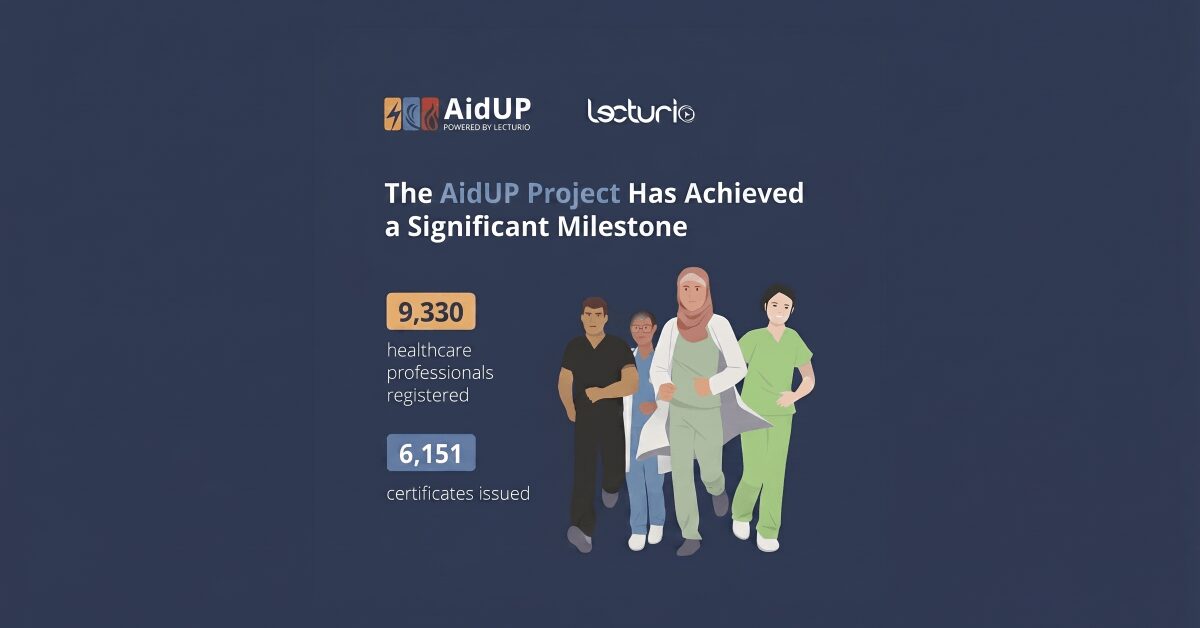
For institutional leaders, the success of a disaster response depends on the cohesive competency of the entire medical team. The AidUp project achieved significant organizational depth, recording 9,330 total registrations and issuing 6,151 certificates as of April 2026. This scale ensures that large-scale workforces are speaking the same clinical language during a crisis.
The project effectively reached across the clinical hierarchy, receiving registrations of over 4,000 nursing staff members and over 640 specialized and primary care physicians. This multi-tiered approach ensures that all roles—from facility leadership to mid-level medical personnel—are aligned and prepared for disaster protocols.
Workforce Impact: Traditional vs. Evidence-Based Training Models
| Metric | Traditional On-Site Model | AidUp Evidence-Based Model |
| Deployment Speed | Weeks/Months of scheduling | 72%–75% readiness in < 24 hours |
| Practical Application Score | Variable/Unmeasured | Consistently averaging approx. 4.3/5 |
| Workforce Scalability | Limited by physical space | 9,300+ participants simultaneously |
| Knowledge Retention | Passive; lower long-term ROI | Structured, clear, and concise |
“Day Zero” Readiness: Rapid Workforce Mobilization
In a humanitarian crisis, the speed of upskilling is a primary KPI for NGOs and governmental bodies. AidUp data indicates that the digital-first approach facilitates immediate mobilization. Between 72% and 75% of participants in core modules—such as “Introduction and Assessment of Victims” and “Displacement and Evacuation”—completed their entire training cycle in a single day.
This efficiency allows participants to interact with foundational content independently, which disburdens senior staff and allows for rapid “Day Zero” readiness for the entire team.
The Anchor Metric: Bridging the Gap to Practical Application
The ultimate question for any employer—“Will my staff actually be better at their jobs?”—is answered by the project’s “Practical Application of Theoretical Content” score. Across the various AidUp modules, this metric consistently averaged approximately 4.3/5, reaching as high as 4.4/5 in specialized modules like “Emergency Preparedness (Nursing)”.
This high score correlates directly with the shift in capability observed in the Disaster Casualty Care (DCC) modules. Participants who arrived with “limited or some knowledge” reported developing a comprehensive understanding of necessary practical skills upon completion. These measurable gains ensure staff are prepared for complex emergency scenarios.
Workforce Sentiment and Training ROI
Operational effectiveness is highly dependent on workforce buy-in. AidUp reports an 88% colleague recommendation rate, signaling high perceived value among healthcare professionals. This sentiment is backed by a high level of professional confidence: over 67% of participants stated they were fully confident in applying their new knowledge directly in the field.
Whether you are working for a ministry, governmental organization, medical or nursing school, humanitarian organization, or an authority for civil protection and disaster management, Lecturio’s comprehensive training solutions will empower your target audience to save lives when it matters most.
If you are interested in collaborating with Lecturio on Disaster Casualty Care topics, please reach out to: aidup@lecturio.com
Frequently Asked Questions
How does the AidUp project improve clinical reasoning in disasters?
By utilizing structured, concise materials, the program helps staff move from theoretical knowledge to field confidence, as evidenced by practical application scores averaging approximately 4.3/5. This process strengthens the link between medical theory and patient outcomes in crisis zones.
What is the expected time investment for staff upskilling?
The AidUp model is designed for high-speed deployment; specialized courses within the aid up program allow for a high-speed deployment. This allows organizations to mobilize a competent workforce with minimal lead time.
Can this training be scaled for national clinical workforces?
Yes. The project demonstrated scalability by registering over 9,300 participants across the entire clinical hierarchy, including thousands of nursing staff and specialized physicians, ensuring standardized care across institutions.